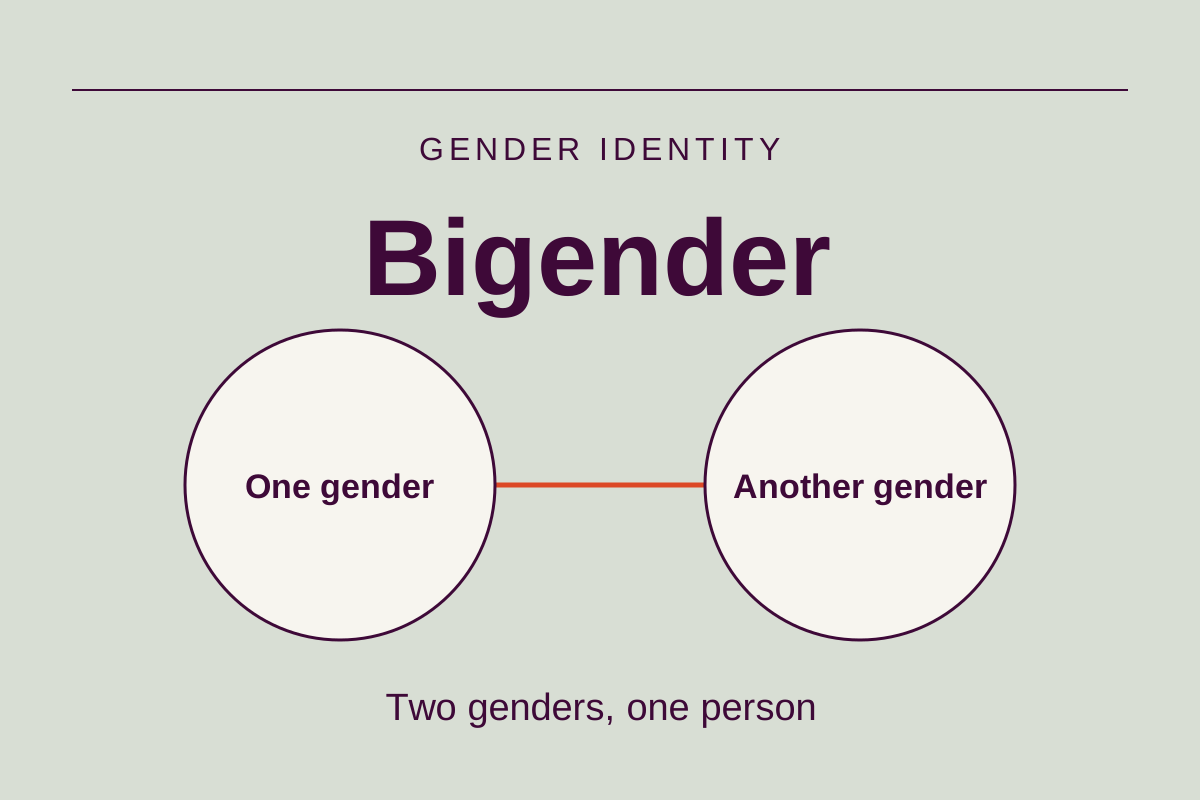
Bigender describes a person whose gender identity includes two genders. Someone may experience those genders together or at different times. The two genders do not have to be man and woman. If this word is new to you, start there: it describes an experience of gender, not a rule about clothing, whom someone dates, or what they must do with their body. Understanding can grow through patient, ordinary conversations rather than a demand to understand everything at once.
What does bigender mean?
The prefix "bi" means two. In bigender, it refers to two genders. One person might describe being both a woman and a man. Another might describe being a man and a nonbinary gender, or two other genders that reflect their experience. Newcastle University's inclusive language guidance explains that this experience need not be limited to man and woman.
For some people, both genders are present at the same time. For others, one feels more prominent at certain times, or their experience moves between two genders. This does not require a predictable calendar or a perfectly equal split. Asking someone for percentages can turn a personal description into an accounting exercise that does not help either of you understand their life.
A label is a way to communicate, not a script everyone must follow. If someone tells you they are bigender, you can take that information seriously without expecting an instant account of every private feeling. A simple question such as "What does that word mean for you?" can be useful when asked with genuine interest and room for the person to decline.
Gender identity is different from attraction and appearance
Gender identity is a person's understanding of their own gender. Sexual orientation concerns attraction. Gender expression includes things such as clothing, hairstyle, voice, and presentation. Sex traits concern physical characteristics. Keeping these ideas distinct helps prevent a common mistake: hearing one piece of information and assuming it tells you everything else.
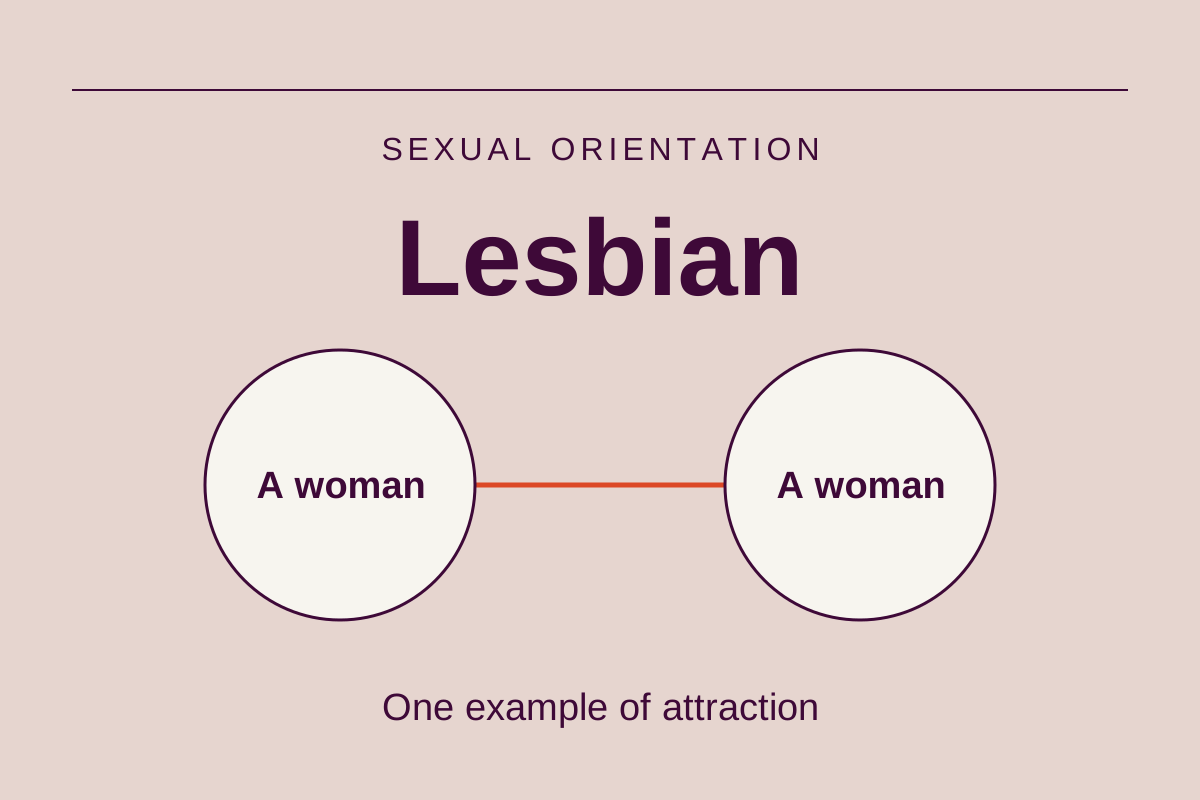
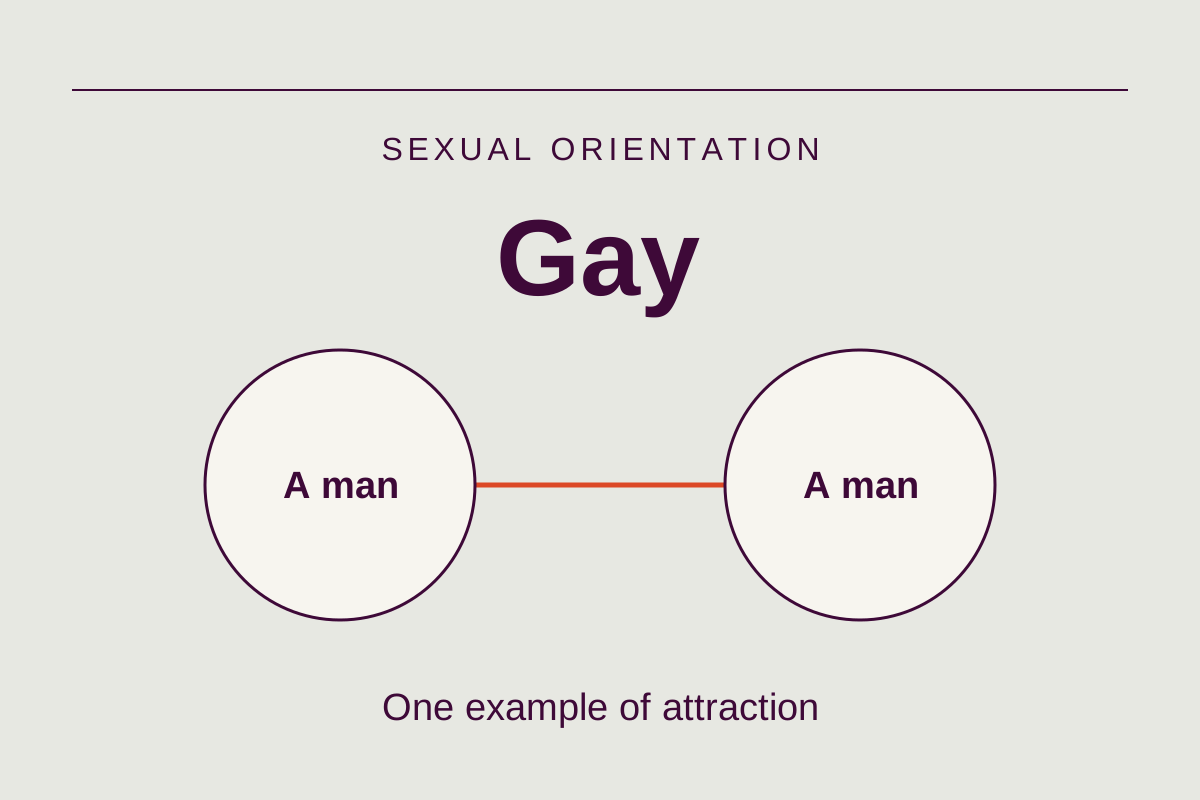
Being bigender does not establish whether someone is gay, straight, lesbian, bisexual, asexual, or uses another orientation label. A bigender person can have any of these experiences of attraction. If they share an orientation term too, use the language they choose rather than deciding that the combination is too complicated to accept.
Clothes cannot confirm or rule out being bigender. A person may enjoy a varied wardrobe while identifying with one gender, or dress similarly every day while being bigender. Work requirements, comfort, finances, safety, and taste all influence what someone wears. Pronouns also do not provide a reliable identity test. Their purpose is to help people refer to someone respectfully, not to give strangers a complete profile.
How bigender relates to nonbinary, transgender, and genderfluid
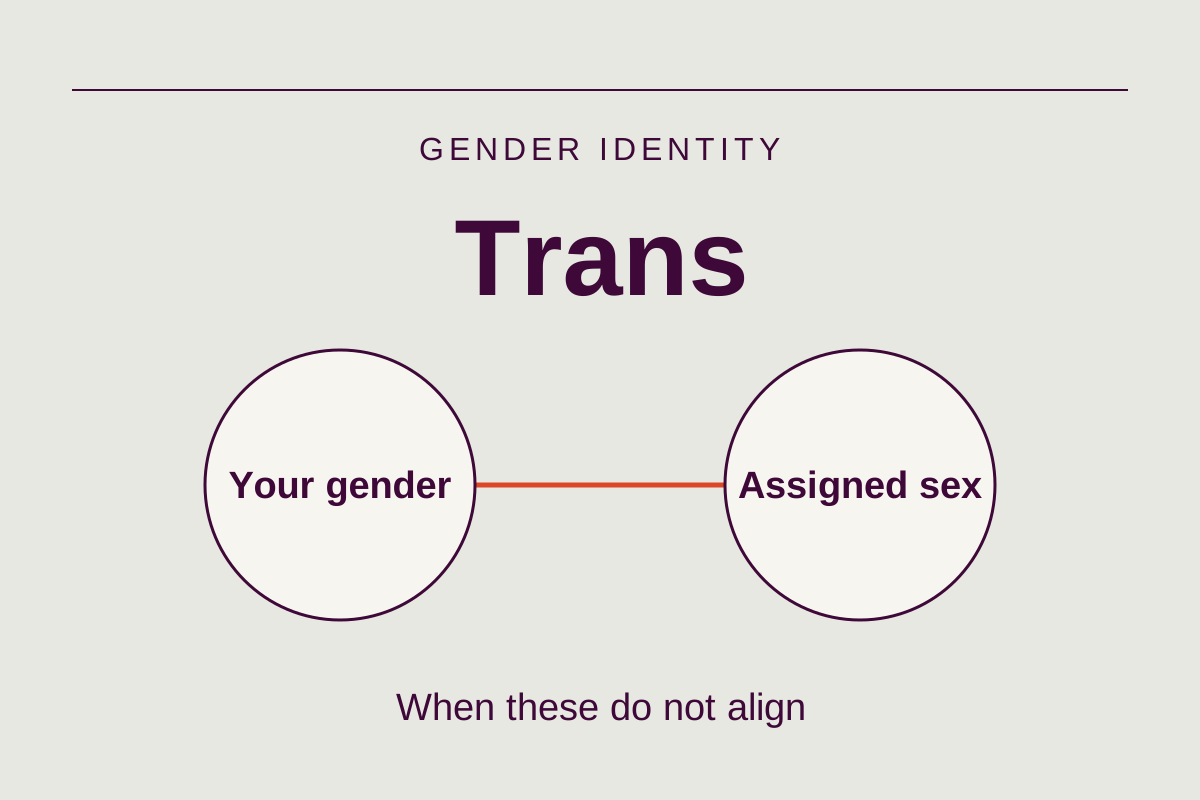
Nonbinary is a broad term for gender experiences that are not exclusively man or exclusively woman. Bigender can sit within that broader description. Transgender is another broad term that many people use when their gender differs from the sex they were assigned at birth. Some bigender people describe themselves as both nonbinary and transgender. Others prefer only bigender.
Genderfluid usually communicates that a person's experience of gender changes over time. A bigender person whose experience moves between two genders may also use genderfluid. Someone who consistently experiences two genders together may not. These words can overlap without becoming interchangeable. UCSF's glossary of terms provides a starting point for distinguishing gender identity, expression, and related language.
You do not have to assign someone every broader category that could apply. Think of how a person can choose a specific description of their hometown instead of listing every region it belongs to. The practical question is what communicates their experience comfortably. If you are speaking about them, follow their preference rather than trying to correct their personal introduction.
What this can look like in everyday life
Imagine a person who describes feeling both a man and a woman throughout daily life. They might wear the same work clothes all week and use one set of pronouns. Their identity is not on hold because other people cannot see both genders. The meaningful experience is how they understand themselves, not whether their presentation makes that experience obvious.
Another person might find that one of two genders feels more present at different times. They may choose different clothes or language, or keep those things consistent. These are illustrative possibilities, not a checklist. Neither person is more convincingly bigender. Both still have ordinary routines, responsibilities, friendships, and interests that are not explained by gender alone.
For someone newly finding words, the practical challenge may be modest: finding a way to introduce themselves, asking a friend to avoid an uncomfortable term, or deciding what to put on a form. Try asking about that actual challenge. A useful conversation can focus on one manageable request instead of turning into a discussion of every possible identity.
If you are exploring whether bigender describes you
You do not need to pass a test or recreate someone else's story. Start by noticing what feels accurate about the idea of two genders. Does it describe an ongoing sense of yourself, a changing experience, or something you are still struggling to put into words? What feels helpful about the word, and what does not? The aim is understanding, rather than earning a label.
Private journaling can be one option. You might write about when particular language feels comfortable, what expectations feel imposed, and what you would like other people to understand. Keep your notes somewhere private if disclosure could create difficulties. You do not need to monitor yourself constantly or interpret every preference as evidence. Enjoying a hobby, hairstyle, or outfit does not require a conclusion about gender.
You can try a description privately, use it with one trusted person, or remain unsure. You can also learn that another term fits better. A change in wording is not automatically a sign that earlier reflection was false. People often need several attempts to express complicated experiences clearly. What matters is leaving room for honesty without pressure to perform certainty.
Pronouns, names, and respectful practical questions
A bigender person might use she/her, he/him, they/them, more than one set, or another set of pronouns. Some people prefer one name in all settings. Others use different names or ask for a change. None of these choices alone establishes whether the person is bigender. Ask about the specific language they want you to use.
If someone uses more than one set of pronouns, do not assume you know what that means in practice. You can ask, "Would you like me to alternate, use either, or check with you?" Another useful question is, "Is this the name you want me to use around everyone?" A person may be open in one setting and private in another, so consistency and safety can require different choices.
If you make a mistake, correct it briefly and move on. A lengthy apology may leave the other person feeling responsible for reassuring you. Practice unfamiliar language privately rather than asking them to coach every sentence. Respect is built through a pattern of attention, including what you say when the person is not present.
Bigender is not the same as bisexual, intersex, or a mental health diagnosis
Bigender concerns gender identity. Bisexual concerns attraction to more than one gender. A person can be both, either, or neither. Similar prefixes can make the words easy to confuse, but they describe different questions. If someone says bigender, do not respond by asking about their dating history unless they independently invite that conversation.
Intersex refers to variations in sex characteristics, rather than the experience of having two genders. Being intersex does not automatically make someone bigender, and being bigender does not establish anything about chromosomes, hormones, or anatomy. A conversation about identity is not permission to ask for medical records or details about someone's genitals.
Bigender is not another name for dissociative identity disorder or "split personalities." It describes gender, not separate personalities or a diagnosis. If someone seeks care for distress, memory concerns, anxiety, or another difficulty, those concerns deserve their own assessment. A gender label does not establish their cause, and it should not replace a careful conversation about what the person is actually experiencing.
Disclosure, privacy, and the choice of when to share
You do not have to tell everyone that you are bigender. Disclosure can depend on trust, practical needs, readiness, and safety. Someone might want a partner to understand but not want the information discussed at work. Another may choose to be open in many settings. Neither approach is a measure of whether their identity is real.
Before a conversation, decide what you want the listener to know and what you are asking them to do. You might say, "Bigender helps describe my experience. I would like you to use this name, and I am not ready for the rest of the family to know." You can offer a resource without agreeing to answer every question that follows.
If sharing could affect your housing, financial support, safety, or access to essential care, make a practical plan first. Consider who can support you and where a conversation would feel safest. The Trevor Project's Coming Out Handbook includes reflection tools, especially for young people. Friends and relatives should never assume that knowing gives them permission to tell others.
Relationships and family conversations
A partner may need time to understand new information, and a bigender person may need reassurance that the relationship remains a place where honesty is welcome. Try separating immediate practical questions from larger uncertainties. What name should we use? What can be shared with others? Are any assumptions about the relationship changing? Which questions can wait until we have both had time to reflect?
Learning that a partner is bigender does not automatically determine your own orientation or tell you what must happen next. You can discuss attraction, boundaries, language, and commitment without forcing an instant decision. Each partner can be honest about their experience while treating the other as a person rather than a problem to resolve.
Parents, siblings, and friends can begin with ordinary care: "I love you, and I want to understand what helps." Avoid joking about someone being indecisive or demanding a permanent answer. If you need space to work through your own feelings, seek support without sharing identifying details beyond the permission you have. Your learning process should not become the person's public story.
Faith, belonging, and questions without forced answers
Bigender people can have many different relationships with Christianity and other faiths. Some value worship, prayer, and church community. Others are rethinking beliefs or recovering from painful conversations. It is unhelpful to presume that exploring gender necessarily means rejecting faith, or that having faith settles every question about gender.
Christian communities differ in their interpretation of gender, scripture, and belonging. If you are navigating those differences, name what you need from a conversation. Are you seeking theological study, support with family conflict, space to grieve, or help finding words? A counselor and a pastor may have different roles, and you can ask each person how they will approach your goals.
No one needs to rush a theological conclusion to deserve care. You can take your convictions seriously while also noticing the effect that pressure, secrecy, or conflict has on daily life. Our article on Christianity, LGBTQIA+, and faith offers a related discussion. The NB TIES page is another existing place to explore resources.
What support can focus on
Counseling does not require arriving with a settled label. You might want help managing a difficult conversation, understanding your reactions, deciding on boundaries, or making room for both uncertainty and everyday responsibilities. Useful goals are concrete: feeling less alone, communicating more clearly, or deciding what information to share with a particular person.
Made Free For Life offers online telehealth services available in WA and FL, with Christian principles available upon request. Learn about the counseling approach or get in touch to discuss fit. Being bigender can be meaningful without having to become the subject of every conversation. You still get to be a whole person whose values, relationships, interests, and hopes deserve attention.
Frequently asked questions
Does bigender always mean being both a man and a woman?
No. That is one possible description, but the two genders need not be man and woman. A person may describe two genders together or at different times. Ask how the individual understands the term rather than assuming a fixed combination. They may share as much or as little detail as they choose.
Is bigender the same as genderfluid?
The terms can overlap. Bigender emphasizes two genders, while genderfluid emphasizes change in the experience of gender over time. Some people use both words. Others consistently experience two genders together and do not use genderfluid. Neither term tells you which pronouns a person uses, so ask about language separately.
Do bigender people have to change their body or clothing?
No. Being bigender does not require medical transition, a new wardrobe, a particular hairstyle, or any specific appearance. Personal decisions differ. Medical questions, when relevant, belong in individualized conversations with qualified clinicians. You do not need access to someone's medical history to respect their identity.
Can someone be bigender and bisexual?
Yes. Bigender describes gender identity, and bisexual describes attraction. Because the words address different parts of someone's experience, a person can use both. A bigender person can also describe their orientation in other ways. Avoid inferring whom someone dates or loves from their gender label alone.
What if I do not understand a loved one's identity yet?
Begin with respect and one practical question, such as what name to use or what information should remain private. You can learn gradually without demanding that your loved one defend every part of their experience. If you have larger emotional or spiritual questions, seek appropriate support while protecting the privacy they have asked you to keep.