When someone you love is hurting, your first thought may be, “What can I do to make this stop?” That wish can come from deep care. Yet an immediate plan, explanation, or pep talk may miss what the person needs first: someone willing to stay with them while the situation is still hard. Being present is a skill you can practice. You do not need perfect words, a shared identity, or an answer to every question to offer steady companionship.
Begin by finding out what kind of company they want
A friend might want to talk about a hurtful comment, sit quietly after a tense family visit, or enjoy an ordinary evening that has nothing to do with identity. Ask instead of guessing. You could say, “Would you like me to listen, help think through options, or just keep you company?” These are invitations, not a menu the other person has to choose from correctly. They may not know yet. “We can start with listening” leaves room for the conversation to develop without a demand for an outcome.
For LGBTQIA+ people, being asked can matter especially when others have repeatedly spoken for them. Avoid deciding that every concern comes from their orientation or gender. A difficult workday could involve discrimination, an unreasonable deadline, a disagreement, or several things at once. If you need background on terms, explore our identity and attraction articles on your own time. Learning a definition can help you ask better questions, but it does not replace hearing how this person describes their life.
Make the setting easier to use
Privacy, timing, and comfort can shape whether someone wants to speak. Ask whether they prefer a walk, a phone call, a text exchange, or sitting together at home. Some people find eye contact comforting; others think more clearly when they can look away. A noisy restaurant or a room with relatives nearby may make a private subject feel impossible. Offer choices without treating one format as more sincere. A message can be a meaningful way to share something difficult.
The CDC’s guidance on supportive conversations recommends flexibility about format, fewer distractions, and questions that invite more than a yes or no. Put your phone out of reach if you can. If you truly have only ten minutes, say that before a deep conversation begins. “I can listen now for a little while, and I can call again at seven” gives clearer care than appearing available while watching the clock. Make commitments you can keep.
Listen for meaning instead of preparing your reply
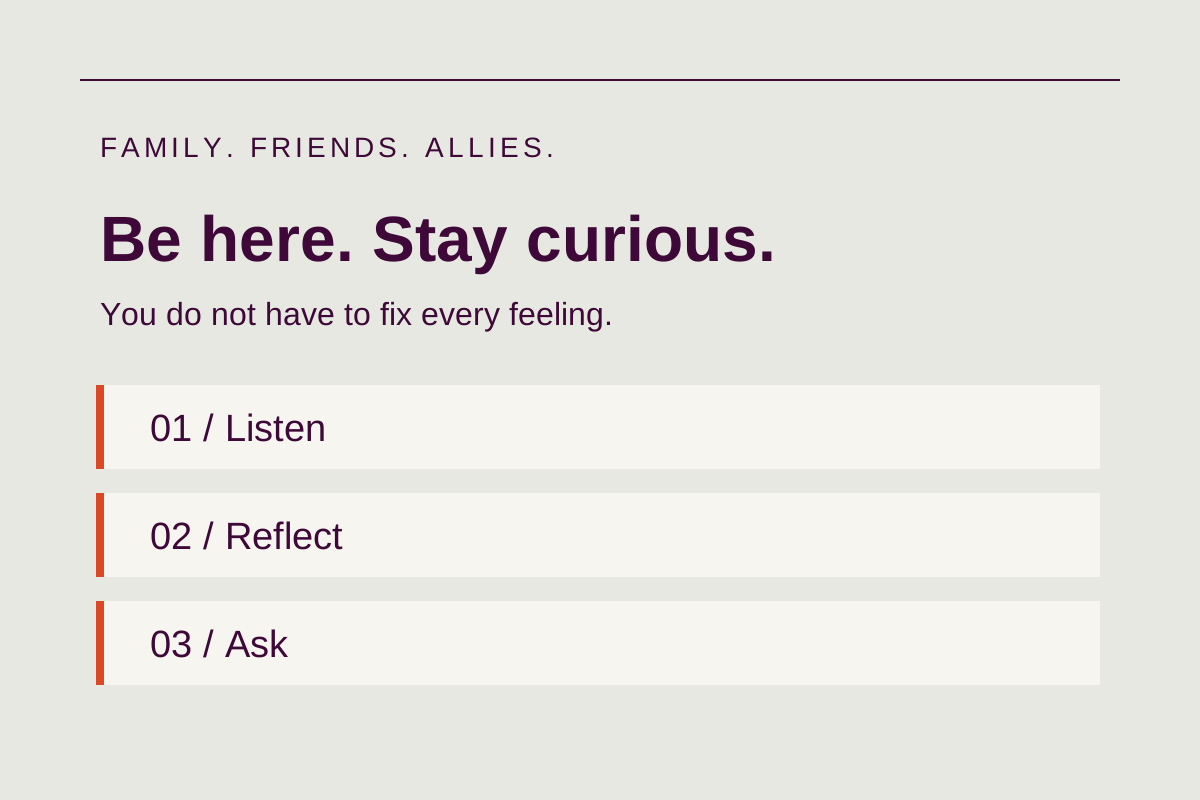
As the person speaks, notice the urge to interrupt with your own experience. You may recognize something familiar and want to show connection. Pause long enough to ask whether your story would help right now. Often the more useful first step is a short reflection: “You were hoping they would ask about your partner, and being ignored hurt.” This shows what you heard without claiming to know everything they felt. Leave room for them to correct you.
A reflection should sound like conversation, not an examination. Avoid repeating each sentence word for word or assigning a feeling they did not name. “I wonder if that felt lonely” is more open than “You are clearly ashamed.” If you lose the thread, ask honestly: “Can you help me understand which part felt hardest?” You are not gathering evidence for a verdict. You are trying to understand an experience well enough to be good company within it.
Acknowledge pain without promising an easy ending
It can be tempting to say that everything will work out, the family will come around, or the person who hurt them surely meant well. You cannot know those things. A promise made to relieve the tension may leave someone feeling even less understood. Try naming what is clear: “You put a lot of thought into that conversation, and the response hurt.” You can offer hope through your own behavior: “I want to stay in touch while you decide what happens next.”
Acknowledging a feeling does not require deciding every fact of a disagreement. If you do not understand what happened, you can say, “I can hear that you are upset. Tell me more about what was said.” Avoid turning uncertainty into a cross-examination. A loved one should not have to present screenshots or prove that an insult was serious enough before receiving basic care. You can listen kindly while keeping room to learn more and think carefully.
Let silence do some of the work
A pause may mean someone is choosing words, taking a breath, or deciding how much they want to share. You do not have to fill it immediately. Settle your posture and allow a little time. If you are unsure whether they want to continue, ask, “Would you like a moment, or would it help if I asked a question?” A quiet response can be useful company. Silence becomes less helpful when it feels like punishment, withdrawal, or a signal that the subject is unwelcome.
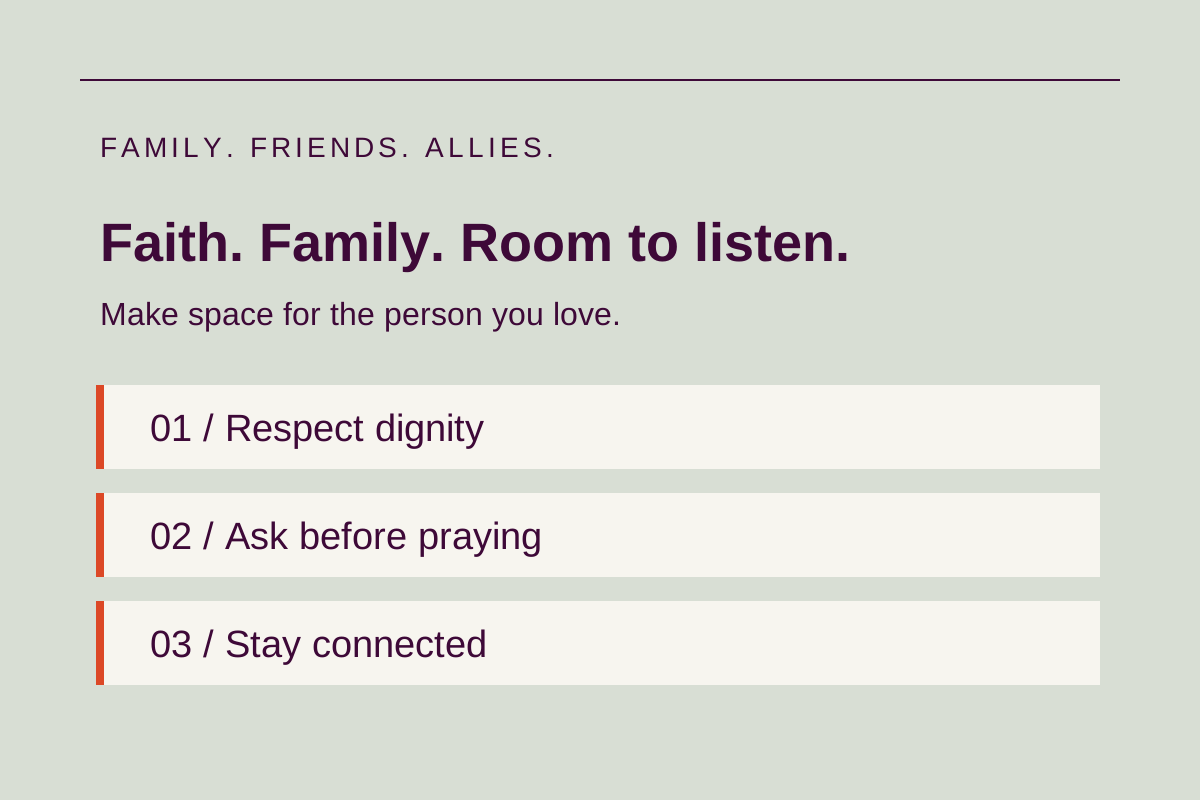
Do not assume touch will help. Ask before offering a hug, holding a hand, or sitting closer. The same care applies to spiritual practices: prayer may be welcome, unwanted, or something the person wants later. “Would prayer feel supportive, or would you rather I just sit here?” gives a real choice. If the answer is no, accept it without making them explain or comfort you. Respecting a small preference helps make the next preference easier to voice.
Ask permission before moving toward solutions
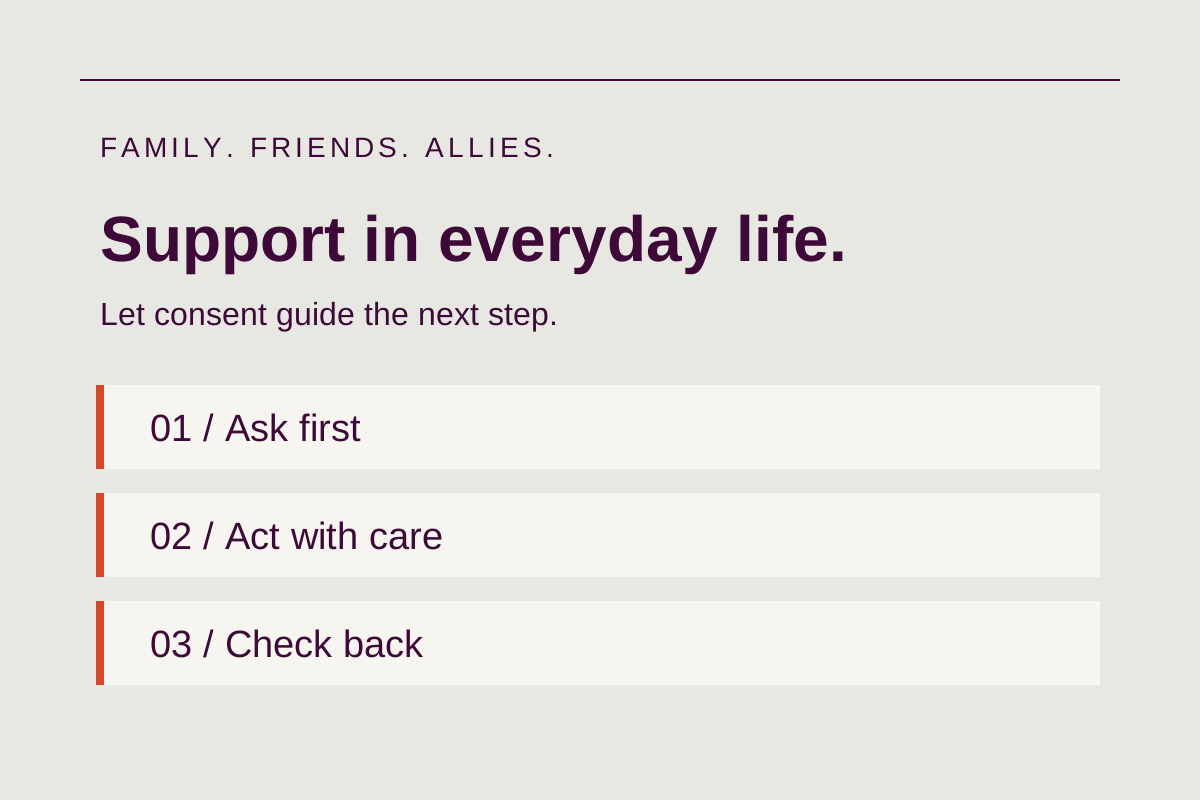
When an idea occurs to you, check whether advice is wanted. “I have a thought about tomorrow’s dinner. Would you like to hear it?” is different from announcing what they should do. If they decline, you can return to listening. If they agree, offer one or two possibilities rather than a long assignment. Explain what you can personally offer and let them assess the fit. Helpful ideas remain suggestions, even when you feel strongly that they would work.
For example, instead of saying, “You need to confront your aunt,” you could say, “Would it help if I sat beside you, changed the subject, or left with you if comments start?” The person may choose a different response, including skipping the gathering. Do not make your support depend on their choosing your preferred plan. Their circumstances may include risks you do not see, such as dependence on housing, transportation, income, or community connections. Curiosity is more useful than certainty about someone else’s next step.
Keep ordinary companionship in the relationship
Support does not have to turn every visit into an emotional check-in. Ask about books, pets, work, recipes, games, and the other parts of their life. Invite them to things they usually enjoy. If you worry that an invitation will feel demanding, make the choice easy: “I am making soup on Saturday. You are welcome to join me, and there is no pressure to talk.” Let declining remain a normal answer rather than evidence that they are rejecting you.
Ordinary inclusion also means making room for partners, chosen family, and different ways of living. Ask whom they want to bring instead of assuming everyone has a spouse or wants a date. Someone who is asexual, questioning, single, or private about relationships still belongs in family life. Your ongoing interest should not depend on receiving more personal information. Sometimes the most reassuring message is that they remain wanted at the table after a serious conversation has ended.
Protect privacy while being honest about safety
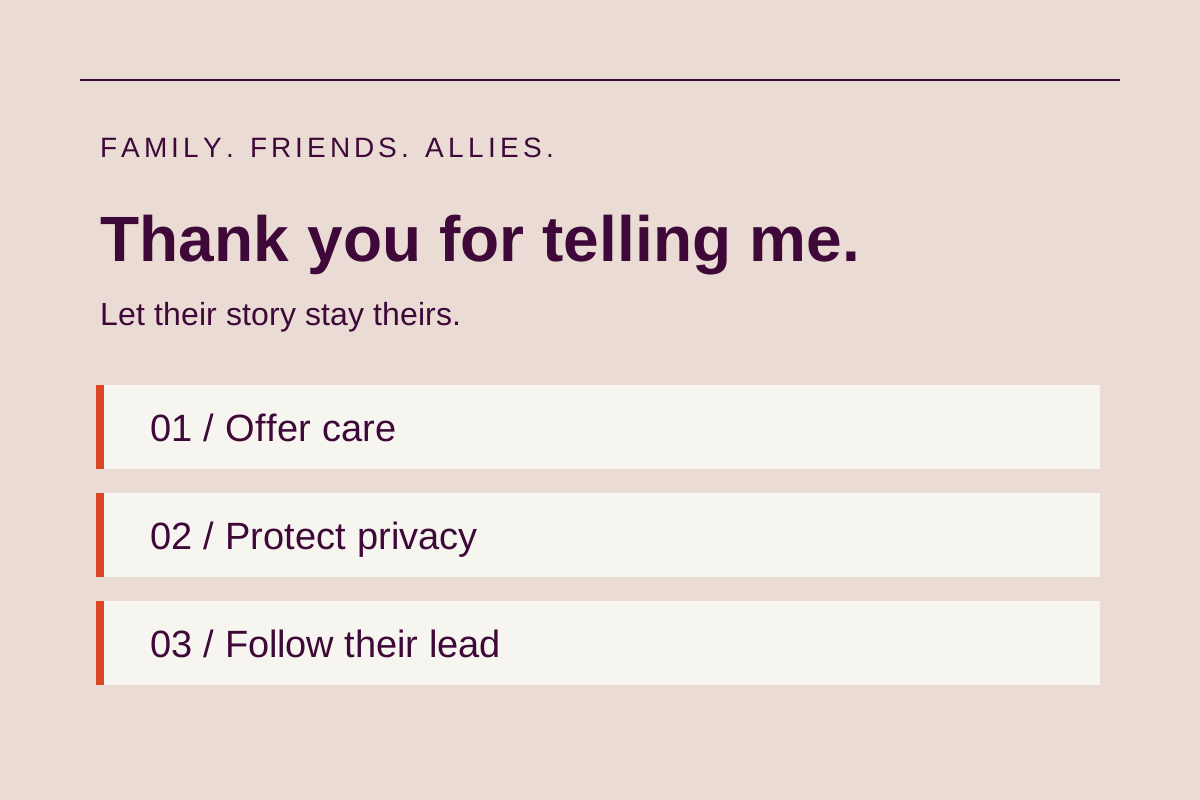
Ask what may be shared and with whom. A disclosure made during a private walk is not permission to repeat it to a spouse, sibling, pastor, or group chat. Avoid vague assurances if you have specific limits. You could say, “I will keep this private. If I think someone is in immediate danger, I may need help to keep them safe, and I would try to involve you.” Keep that exception tied to actual danger, not discomfort with an identity or a decision.
Digital habits matter too. Do not forward messages, save revealing screenshots to a shared album, or mention a private identity in a comment. Before checking in by text, ask whether their phone is private and what wording feels comfortable. You can arrange a neutral message such as, “Thinking of you. No reply needed.” Privacy is a form of practical support because it allows the person to decide who knows their story. You can seek guidance for yourself while leaving out identifying information.
Set limits that allow care to continue
You can care deeply and still need sleep, work time, breaks, and your own support. A useful boundary names your capacity without blaming the other person: “I want to hear this, and I am too tired to listen well tonight. Can I call tomorrow afternoon?” If you promise to call, follow through. If you cannot, communicate. A clear limit is easier to work with than a pattern of agreeing to everything and then disappearing.
Being a friend or family member does not make you someone’s therapist or only source of help. You can say, “I can keep you company while you look for more support, if that would help.” Do not pressure them to share private treatment details as proof they are trying. If a conversation becomes insulting or threatening, you may end it and seek safety. Supporting an LGBTQIA+ person never requires accepting harm, and setting a respectful boundary does not withdraw their right to dignity.
Repair a conversation when you get it wrong
You may interrupt, minimize something, or give advice that lands badly. Try a brief, specific repair: “I moved straight into solving it. You asked me to listen. I am sorry. Would you like to start again?” Avoid explaining your good intentions at such length that the person must reassure you. The useful question is what you can change now. They may want to continue, take a break, or return another day. Respect that choice.
Afterward, reflect privately. What made listening hard? Did the uncertainty frighten you? Did a faith concern, old family habit, or fear of being unhelpful take over? These questions are not a reason to judge yourself harshly. They identify a skill to practice. Choose one change for the next conversation, such as waiting before responding or asking permission before advice. Consistent small repairs build more credibility than a grand promise that you will never make another mistake.
Bring reflection into your next conversation
Before you reach out, ask yourself what you are offering. Do you have time and privacy? Can you accept an answer you did not expect? Are you asking because you want to know them better, or because you want reassurance that they are doing what you prefer? You do not need perfectly pure motives to show up. You do need enough honesty to keep your worry from becoming another task for the person you hope to support.
After listening, write down only your own next step, not a detailed record of their disclosure. Perhaps you agreed to send an invitation, read about a term, or call on Friday. Let follow-through carry the message. You can also ask, “Was there anything about our conversation that helped, or anything you would like me to do differently?” They do not owe you a review. Give them room to answer briefly or not at all, and keep practicing the care you have already agreed to offer.
Make room for support at Made Free For Life
Some conversations bring up anxiety, relationship strain, faith questions, or patterns that feel hard to change on your own. You can explore the counseling approach at Made Free For Life and ask whether it fits the concerns you want to discuss. Christian principles are available upon request. A spiritual conversation should follow the goals you bring, rather than become an assumption about what you need because of your identity or family role.
Contact Made Free For Life to ask about fit and availability. Online telehealth services available in WA and FL. You do not need to wait until you can explain everything neatly before asking about support. For today, one manageable act may be enough: put down your phone, ask what kind of company would help, and listen to the answer without turning it into a project.
Frequently asked questions
What if I do not know what to say?
A short, honest response is enough: “I care about you, and I want to understand.” Ask whether the person wants listening, advice, or company. You do not need to fill every pause.
Does listening mean I agree with every decision?
You can acknowledge someone’s feelings and dignity while still thinking carefully about a decision. Listen first, and ask permission before offering a different perspective. Avoid making respect conditional on agreement.
How often should I check in?
Ask what feels helpful and realistic. A planned call or a brief message may work better than frequent requests for updates. Let the person know when a reply is optional.
Can I have boundaries while supporting someone?
Yes. State what you can offer and when you are available. Consistent, honest limits help protect the relationship. You are allowed to seek your own support and to end threatening or abusive conversations.